
The Silence Between the Notes
Spotify Playlist
Since my heroine, Claire, is a pianist, there is a great deal of music in the novel. As I was writing, several piano pieces and songs I was listening to seemed to evoke the emotional lives of my main characters, Claire, Eugenia, Tolly, and Alistair, so I created this playlist for readers to enjoy.
Book Group Resources
The thought of readers gathering to discuss my novel brings me joy. You can find discussion questions for The Silence Between the Notes. Scroll down for a recipe for Chocolate Cranberry scones you can eat while discussing.
Inspiration

The Truccian society I portray in The Silence Between the Notes was heavily influenced by the New Economic Period in Soviet history (1921-1928), in which economic strictures were relaxed and small industries, farms, and shops flourished as electricity, radio, telephones, and film first became widely available, and the backlash that occurred during the Great Purges (1933-1938), when artists, writers, musicians, intellectuals and other “Enemies of the People” were imprisoned, exiled, executed, or forced into suicide for not being found sufficiently loyal to the Soviet government.
Certain scenes in The Silence Between the Notes pay homage to great Russian and Soviet-era novels. Like Natasha, the heroine of War and Peace, Claire goes to the opera, but fortunately keeps her head and is not seduced away from her true love. Likewise, Mrs. Teal’s story echoes events portrayed in Lydia Chukovskaya’s Sofia Petrovna.
In The Flight of the Bluebird, the second novel in the trilogy, which follows The Silence Between the Notes, a coup occurs that resembles the violence and confusion of the 1993 October coup I witnessed while studying abroad in Moscow. The photo above is one I took after Boris Yeltsin bombed the “White House,” the Duma’s legislative building, when the Duma tried to oust him from power. Nearly 500 people were killed, making it the bloodiest uprising since the 1917 Bolshevik revolution. I was 20 at that time, and it was the first time I had ever heard the sound of machine gun fire and the distant boom of bomb shells dropping.
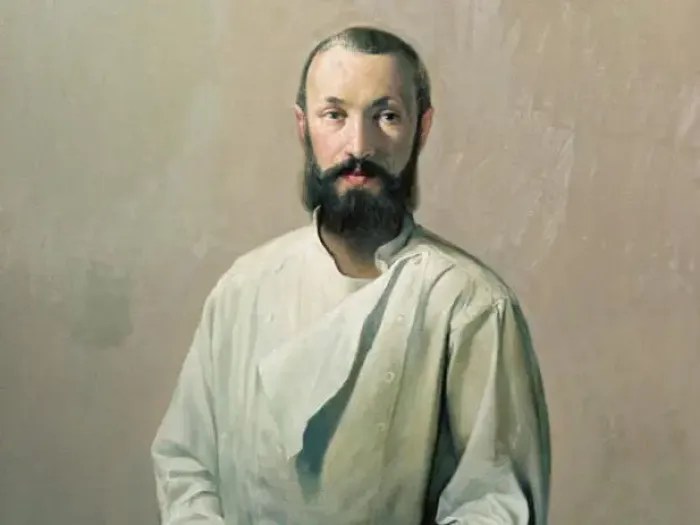
Lumien, the scholar Claire and her parents revere, is inspired by the Russian philosopher and literary critic Mikhail Bakhtin, pictured below. I studied with Caryl Emerson and Saul Morson, the authors of The Creation of Prosaics, one of the definitive works on Bakhtin’s oeuvre. My life and scholarship has been profoundly shaped by their insight into Bakhtin’s aesthetics and ethical inquiry.
Photo Credits: Key Theories of Mikhail Bakhtin
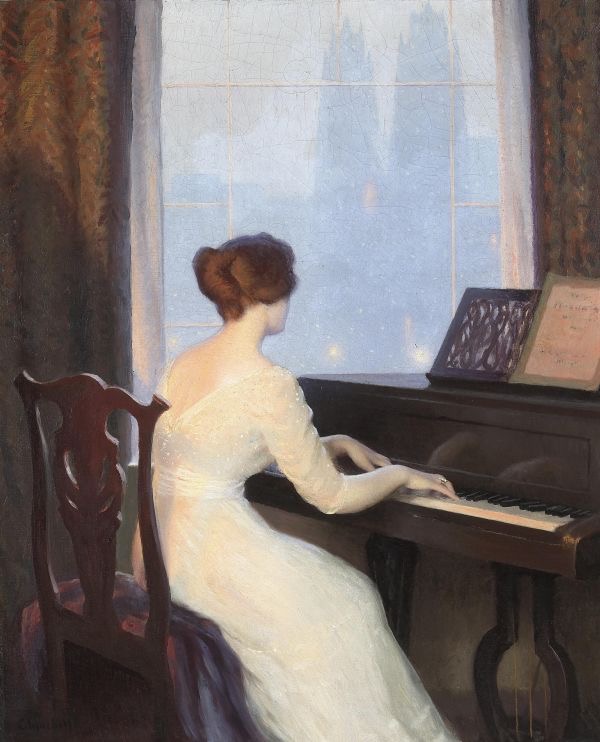
Raichevsky, the composer whose music makes Claire wish to become a pianist, is a combination of Rachmaninoff and Tchaikovsky.
Von Solnitz, Claire’s other favorite composer, is stand-in for Mozart.
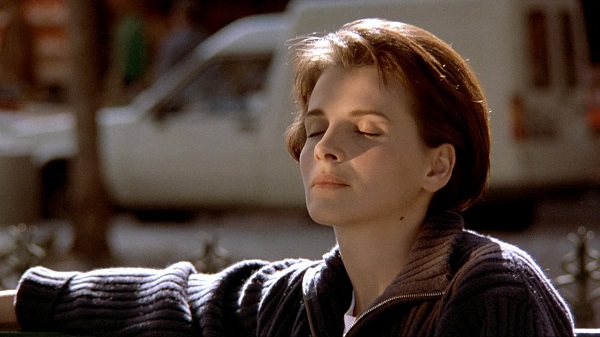
The films of the Polish/French director Krzysztof Kieślowski inspired several scenes in The Silence Between The Notes. Claire’s mother’s blissful moment sitting in the park is an homage to a scene in Bleu in which Julie, played by Juliette Binoche, experiences a similar state of bliss when the sunlight plays over her face.
Photo Credits: Film Aflixionado
Claire and Eugenia’s portrait, which is used to promote their radio program was inspired by the billboard advertisement featuring Valentine in Rouge.
Photo Credits: Three Reasons: Three Colors: Red

For their first broadcast, Claire and Eugenia tell several stories. The story Claire tells of the cow is inspired by the Irish song, “Ballyconnell Fair.” My favorite version is sung by Eimear Arkins. You can find it here.
Eugenia is fascinated by insects and encourages Claire to create musical pieces about the insects they discover in the palace garden. Claire’s Insect Suite, is inspired by Saint Saën’s Carnival of the Animals and Karel Čapek’s Insect Play.
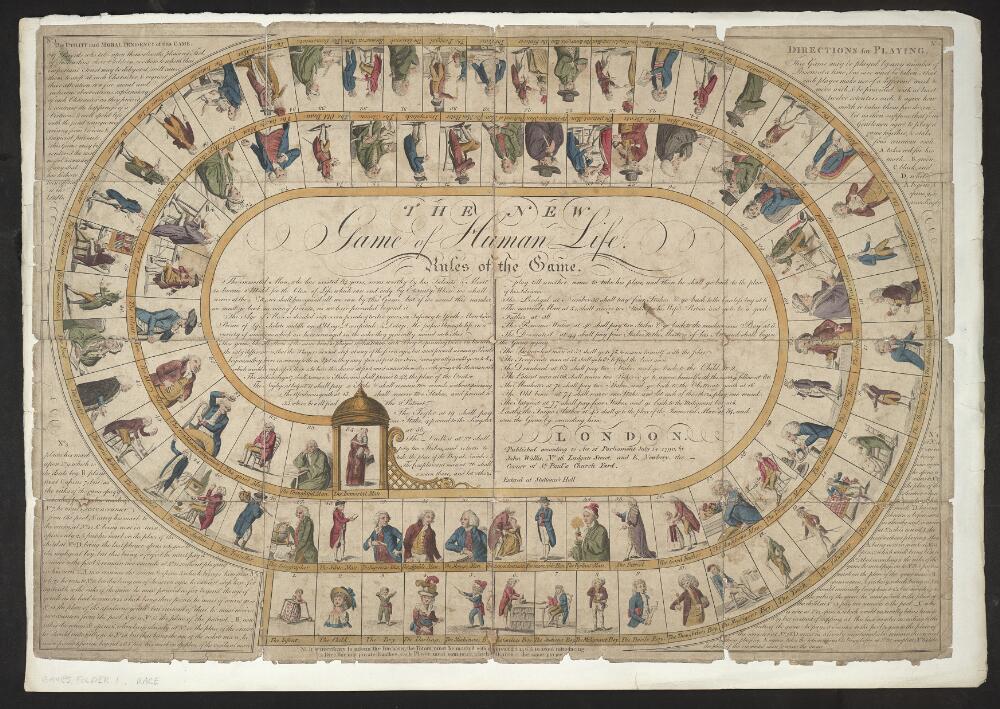
Photo Credits: Brown University Library, “The New Game of Human Life” (1790)
My husband, child, and I love to play board games. In The Silence Between the Notes, Claire creates a role-playing board game for Eugenia that is inspired not only by the Hasbro game Life, which I loved playing with my cousin Chrissy growing up, but by “The New Game of Human Life” created by John Wallis and Elizabeth Newbery in 1790, which I saw a replica of during a visit it to Colonial Williamsburg.
Intrigued, I bought a copy of the board game at the gift shop. Though I loved the spiral design of the board, I found the rules overly complicated. I came up with a simplified design for a game in which a player could navigate a game board, determining the life of their character through chance (rolling a die each turn), choosing one of the options on the cards color coded with the space they landed on (free will), or choosing a number at the beginning of the game and committing themselves to whatever option designated by that number on the card corresponding to the space on which they land (fate). Thus, Claire’s game of Fate, Chance, and Free Will was conceived!
COMING SOON: A downloadable pdf of a Fate, Chance, and Free Will board, a packet of cards for Clarence, Martha, Billy, and Jenny, and the rules.
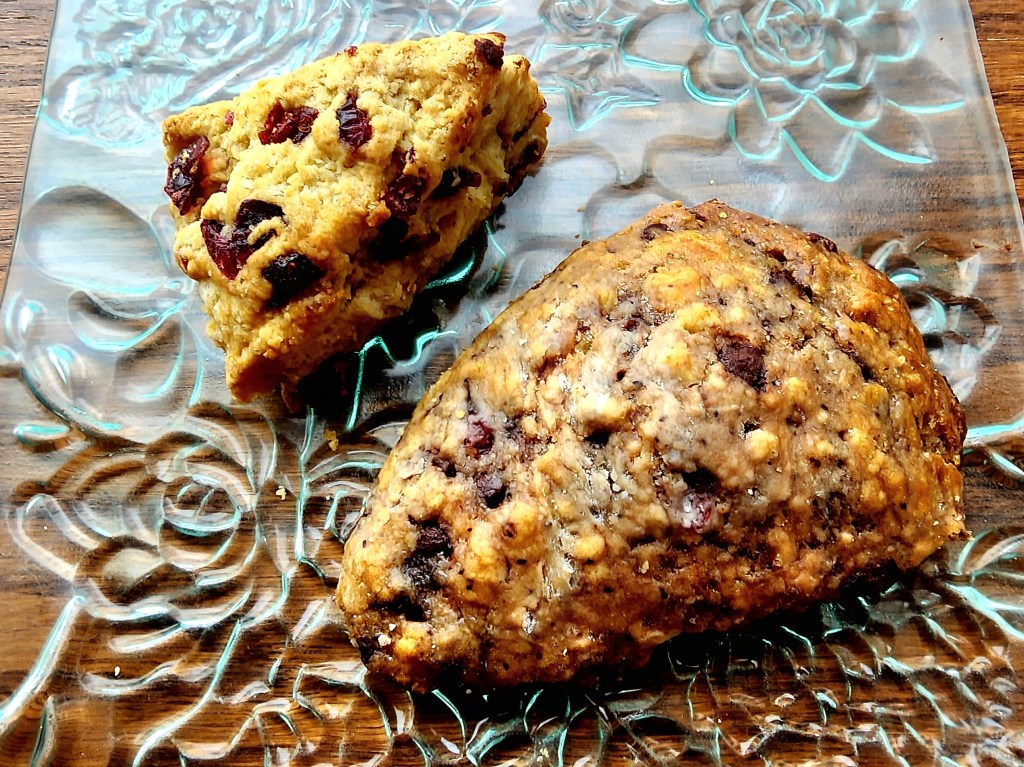
Chocolate Cranberry Scone (upper left) and Chocolate Lingonberry Scone (lower right) made by Laura Nemetz, who tested my recipes. Thanks, Laura! Photo: Chrissy Gulick.
Would you like updates and newsletters sent directly to you? Subscribe below!
Follow me on:
 Sarah B. Mohler

Leave a comment